
Meme Challenge: Dank Memes
MagicLabCard
4.55.29K Reviews
- Version
- 2.8.7
- Installs
- 10.00M
- Age Rating
- Teen
Screenshots
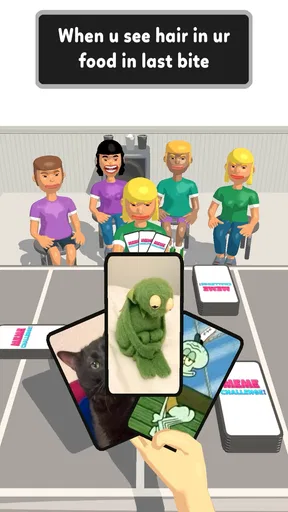
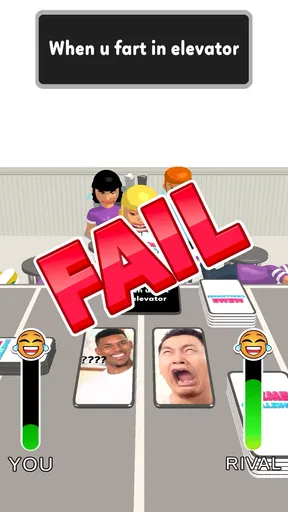
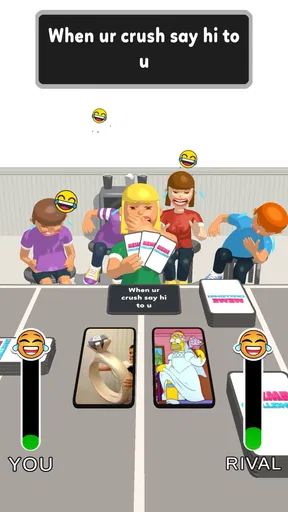
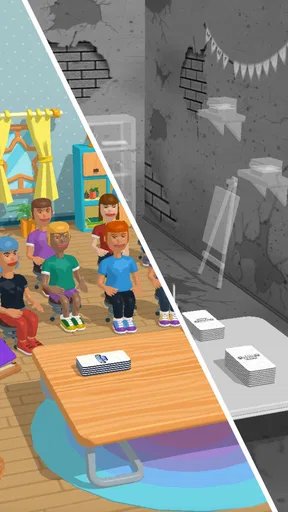
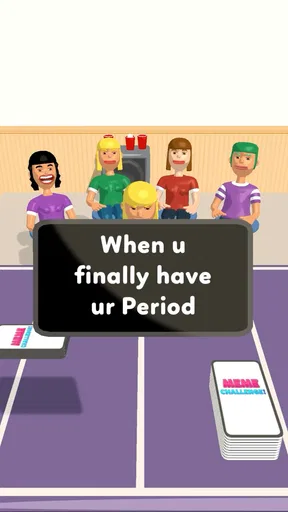
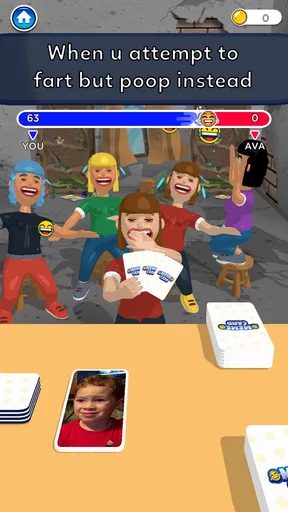
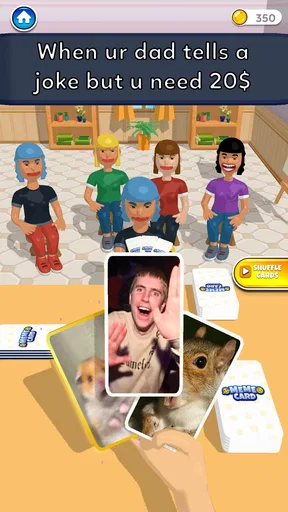
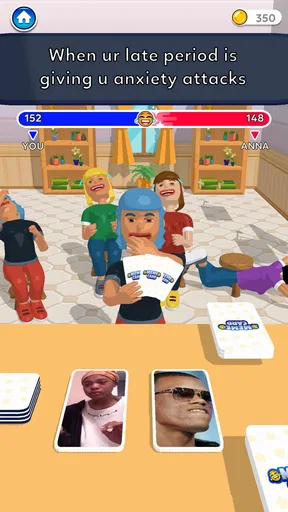
Our Review of Meme Challenge: Dank Memes
 Analysis by Appyee
I spent time with Meme Challenge: Dank Memes as a quick, competitive card game built around making jokes rather than mastering a complicated rulebook. The basic appeal is easy to understand: you are given a meme-style challenge and try to create the funniest response, aiming to become the player everyone remembers at the table. That makes it a natural choice for casual sessions with friends, especially when nobody wants to learn an elaborate strategy game first.
What surprised me is how much the experience depends on the people playing, not just the cards. With a group that enjoys absurd humor, the rounds can move from a simple laugh to surprisingly creative arguments about which answer fits best. With a quiet group or players who dislike internet-style humor, the same format can feel repetitive. My recommendation is therefore quite specific: this is best treated as a social party game with a card-game structure, not as a deep solo strategy title.
How the game feels in ordinary use
I find the everyday appeal of Meme Challenge less about playing for long stretches and more about fitting a few rounds into the gaps in a visit or break. In this section, I focus on how the game’s social pace changes with the group and what I would do to keep a casual session welcoming. That context also helps explain where the format can feel less dependable.
Fast rounds, but not a speed-focused game
The strongest performance impression comes from the short-session design. I can imagine opening it while waiting for friends, passing time during a break, or starting a few rounds after dinner without committing the evening to it. The game’s central activity is immediate enough that there is little reason to spend a long time preparing. That quick entry is one of its practical strengths compared with traditional card games, where players may need to arrange a table, explain turn order, and keep track of several rules.
That does not mean every round feels equally fast. The game may move quickly when everyone chooses an answer instinctively, but the funniest moments often take longer because players compare possibilities and defend their choices. In my experience, that pause is part of the entertainment rather than a technical problem. If you want a card game that rewards careful planning and efficient turns, this will probably feel lightweight. If you want something that can fill a few spare minutes without demanding concentration, the pace is much more suitable.
The free-to-play format also lowers the barrier to trying it. It is available without an upfront purchase, while optional in-app items are priced from around three to four dollars each. I would approach those purchases cautiously at first. The core question is whether the humor and replay value work for your group before spending anything beyond the initial download.
What happens when the table gets busy
The most demanding moments are not necessarily the ones with the most complicated rules. They are the sessions where several people are reacting at once, changing their minds, laughing over an answer, and trying to keep the round moving. In those situations, the game’s real challenge is social organization. One person may need to act as the judge or keep everyone focused, because a joke can easily turn into a long side conversation.
That is also where the game shows its best use case. I would bring it to a small gathering where the players already know one another’s sense of humor. Friends can build on shared references, tease each other, and turn an ordinary prompt into an inside joke. The game gives that interaction a structure, so the conversation does not depend entirely on someone inventing an activity from scratch.
For a larger group, I would set expectations before starting. Not everyone needs to participate in every joke, but players should understand how answers are selected and when a round ends. Without that small amount of coordination, the experience can become noisy rather than funny. This is a trade-off compared with a more formal card game: Meme Challenge is easier to begin, but it relies more heavily on the group managing itself.
Resource demands and everyday practicality
I would not choose this game for a phone whose storage is already extremely tight, but it is not the kind of title I would expect to treat like a large console-style download. Its practical demands are closer to a casual mobile game than to a visually intensive action game. The minimum supported Android release is version eight point zero, which makes it accessible to many older devices while still excluding some very old phones.
For everyday use, the bigger concern is attention rather than hardware. Meme games encourage repeated short checks, and the format can be tempting when you only intended to play one round. That is useful during a commute or a waiting period, but less useful if you need a game that can be paused mentally and resumed with a detailed strategy. I found the concept better suited to bursts of social play than to long, solitary sessions.
On a modern phone, I would expect the game to be comfortable for its intended role, but I would not confuse that with a guarantee that every device behaves identically. Older hardware can have less room for background apps, and a phone under heavy system load may make any casual game feel less responsive. Closing unused apps before a group session is a sensible habit, especially if the phone is also handling messages, music, or a video call.
Reliability, recovery, and the limits of the format
For a party game, reliability includes more than whether the app stays responsive: it also means keeping the group’s momentum when a phone or conversation interrupts play. I look at practical ways to recover without turning a missed moment into a dispute, and at the limits that come from humor, audience, and reliance on a shared device. Those trade-offs shape whether this format is a good fit at all.
What makes a session feel dependable
Reliability matters differently here than it does in a competitive action game. A brief delay is annoying, but the larger problem would be losing the rhythm of a social round. If players are laughing and deciding between answers, an interruption breaks the mood more than it affects a score. I therefore judge the game by whether it can get out of the way and let the group focus on the joke.
The current version is 2.8.1, and the game comes from MagicLab. Its public reception is strong overall, with a 4.5 average from roughly 195 thousand ratings and more than 5 thousand written reviews. Those figures suggest that many players find the concept appealing, but they should not be read as proof that every audience will enjoy it. A high rating for a humor-driven game often reflects a good match between the game’s tone and the player’s social circle.
If a session is interrupted, I would treat recovery as a practical part of mobile play rather than assume every round will always resume perfectly. Before starting a group game, it helps to make sure the phone has enough battery and that the person hosting or displaying the session is not about to switch between several demanding apps. If a round is lost, the easiest recovery is usually to restart the activity with a fresh prompt rather than spend the evening trying to reconstruct the previous joke.
Where stability matters most
The game’s popularity is a useful sign that it has found an audience: it has passed ten million installs on Android. That scale can make a casual title feel easier to trust, but it does not remove the need for practical caution. The experience still depends on the phone, the current software environment, and the way the group is using it.
In a solo session, a small interruption is easy to forgive. In a group session, the same interruption affects everyone, so I would avoid starting a round in a place with unreliable connectivity or a phone that is already showing signs of strain. I would also keep the device accessible to the intended players rather than passing it through a crowded room while other apps compete for attention.
One useful habit is to separate testing from hosting. I would first play a few rounds alone or with one friend, learn the flow, and only then introduce it to a larger group. That makes it easier to tell whether a confusing moment comes from the game itself or simply from several new players asking questions at once. It also reduces the chance that a technical hiccup gets mistaken for a rule problem.
Humor is a reliability issue too
Because the game is aimed at teenagers, with a Teen content rating, the tone is not designed to be completely neutral or suitable for every setting. That matters if you plan to play with younger children, at work, or with relatives who prefer clean and conventional humor. I would check the atmosphere before handing over the phone, because an awkward prompt can derail a session faster than a slow screen.
This is one of the game’s less obvious trade-offs. The same irreverent style that makes it memorable for the right group can make it a poor choice for mixed-age gatherings. If you need a universally safe party game, a family-oriented card alternative is likely the better pick. If your friends already share a taste for edgy online humor, the Teen rating is a useful reminder to choose the setting carefully rather than a reason to avoid it automatically.
How it compares with familiar card-game alternatives
Compared with a physical party card game, Meme Challenge is more convenient when the group is already holding phones and nobody wants to carry a box. It can also feel less formal: there is no need to protect cards from spilled drinks or remember which expansion belongs to which deck. The digital format is especially handy for spontaneous play.
The physical alternative still has advantages. A tabletop deck creates a shared object in the middle of the group, while a phone can pull attention away from faces and conversation. Physical cards also remain usable without worrying about battery life or a device becoming unavailable. For a planned game night, I might still choose the boxed version of a favorite party game; for an unplanned ten-minute session, the mobile format wins on convenience.
Compared with traditional strategic card games, this title asks much less from the player’s memory and long-term planning. You are not building a deck, calculating several turns ahead, or learning a large collection of interactions. That makes it welcoming for newcomers, but it also limits the satisfaction available to players who enjoy mastery through complex systems. The game’s replay value comes mainly from combinations of prompts, responses, and people, not from developing a sophisticated personal strategy.
Who should install it and who should skip it
I would recommend it to friends who want a low-commitment humor game, to groups that already send each other memes, and to players who enjoy judging creative answers more than optimizing a score. It can work well as a warm-up before a longer game night, a quick activity during a visit, or a way to include someone who normally avoids complicated card games.
I would skip it if you mainly play alone, dislike meme culture, or want a game with a carefully balanced competitive ladder. I would also look elsewhere if your group needs a game that works equally well for children and adults. The Teen rating alone makes it worth choosing another option for family play with younger participants.
Another reason to skip it is purchase sensitivity. Although the game is free to start, optional items can add up if you feel pressured to expand the experience before deciding whether the basic format suits you. My advice is to let the group’s enjoyment make that decision. If everyone is already laughing with what is available, there is no practical reason to spend immediately.
Small habits that improve the experience
My first tip is to use a short trial session rather than announcing a full game night around it. Give the group a few rounds, then ask whether the jokes are getting better or simply repeating the same style. This quickly reveals whether the particular mix of players is the game’s strength or its weakness.
My second tip is to choose the host carefully. The person with the most reliable phone and the clearest understanding of the round flow should manage the session. That keeps the device from being passed constantly and prevents the game from losing momentum when everyone is trying to decide at once.
My third tip is to treat the judging as part of the entertainment, not as an objective measurement of humor. If players argue about an answer, give the disagreement a limit and move on. The game is more enjoyable when the group accepts that a clever response can lose simply because another one fits the moment better.
My fourth tip is to match the audience before matching the setting. A quiet café, a crowded party, and a family living room all create different expectations. The same prompt can be hilarious among close friends and uncomfortable among people who have just met. Choosing the right group will improve the experience more than changing phones or playing for longer.
My performance verdict
After looking at the way it fits into real mobile use, I see Meme Challenge as a lightweight social card game rather than a technically demanding title. Its appeal comes from quick access, a familiar meme-driven tone, and the ability to turn a phone into a shared source of jokes. The game is most effective when the group supplies the energy and the app simply gives that energy a framework.
Its limitations are equally clear. The humor will not suit everyone, solo replay is less compelling than group play, and the digital format can weaken face-to-face interaction if players focus too much on the screen. Optional purchases also deserve restraint, particularly for anyone who has not yet confirmed that the game works for their group. These are not minor details; they define whether the experience feels fun or disposable.
At no upfront cost, a Teen rating, and support for Android eight point zero or later, it is easy to try for the right audience. MagicLab has built something that can be useful in the gaps between bigger activities, especially when friends want a quick laugh without learning a dense ruleset. My honest verdict is that it is worth trying as a group test, not as a guaranteed personal favorite. If your friends enjoy absurd meme humor and can keep the rounds moving, it may become a reliable party companion. If you want deep strategy, universal family appeal, or a strong solo experience, a different card game will serve you better.
Privacy and Permissions
See what permissions an app requests and how it handles your data.
- Wi-Fi connection information
- view Wi-Fi connections
- Other
- view network connections, full network access, control vibration, prevent device from sleeping, Google Play license check
Verdict
Strengths of Meme Challenge: Dank Memes
- Simple interface makes the meme creation process quick to learn.
- Large collection of meme templates supports many humor styles.
- Offline access may be useful when browsing saved or downloaded memes.
- Sharing options make it easy to send memes to friends and social networks.
- Frequent meme-based challenges can keep casual users entertained.
Limitations of Meme Challenge: Dank Memes
- Some templates or features may require watching ads or making in-app purchases.
- Humor quality can vary, with some memes feeling repetitive or outdated.
- User-generated content may occasionally include offensive or inappropriate jokes.
- The app may need regular updates to keep its meme library current.
- Limited editing tools may disappoint users seeking advanced customization.
Similar Picks in This Category
View All
Solitaire - Classic Card Games
MobilityWare4.6

UNO!™
Mattel163 Limited4.3

Spider Solitaire: Card Games
MobilityWare4.6

Solitaire.com - Classic Cards
Tripledot Studios Limited4.7

Plants vs. Zombies™ Heroes
ELECTRONIC ARTS4.1

Hearthstone
Blizzard Entertainment, Inc.4.1
Frequently Asked Questions
What is Meme Challenge: Dank Memes?
Meme Challenge: Dank Memes is a casual party-style game centered on creating, matching, and judging humorous meme combinations. Players typically use image templates, captions, or prompts to produce the funniest response, then compare results with friends or other participants. Its appeal comes from quick rounds, familiar internet humor, and the chance to be creative rather than from complex controls or a long story campaign.
How does the gameplay work?
Gameplay is generally built around short meme challenges. A prompt or situation appears, and you select or create a caption that you think fits best. Depending on the mode, other players may vote for the funniest entry or the game may evaluate the response through a challenge system. The rules are easy to understand, making it suitable for casual sessions, parties, and quick entertainment breaks.
Does Meme Challenge: Dank Memes require an internet connection?
An internet connection may be needed for some of the app’s main features, especially online matches, advertisements, content updates, leaderboards, or multiplayer functions. Availability can vary by version and device, so users should not assume that every mode works offline. If you plan to play while traveling or without mobile data, check the current store description and test the app before relying on offline access.
Is Meme Challenge: Dank Memes appropriate for children?
Parents should review the app’s current age rating and content details before allowing younger users to play. Meme-based games can include sarcasm, edgy jokes, slang, suggestive references, or user-generated material that may not be suitable for children. Online interactions and advertisements can also affect the experience. The game is generally better suited to older teens and adults who understand internet humor and can handle mature themes.
Is Meme Challenge: Dank Memes free to download and play?
The app may be available as a free download, but free access does not always mean that every feature is included without cost. Depending on the version, you may encounter advertisements, optional purchases, premium content, or limits that encourage upgrades. Before downloading, review the Google Play or App Store listing for pricing, in-app purchase information, and subscription details so you know what to expect.
Play our best games!


